

المدونة
Electronic Archiving and Its Importance in the Digital Age
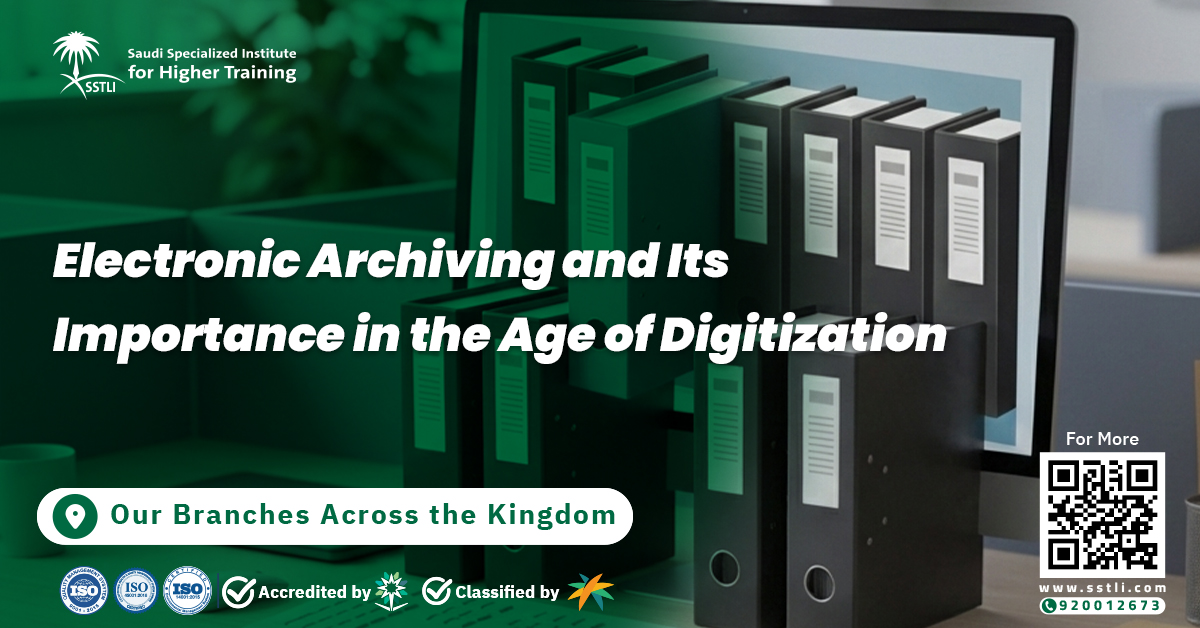
Electronic archiving has become the language of the digital era and one of the most important keys to institutional success today. In a world where information flows nonstop, electronic archiving represents the smart solution for organizing data, accelerating access to it, and ensuring its security and continuity.
In this article, we will explore electronic archiving to understand its concept, components, benefits, challenges, and solutions. At the end, we will introduce you to the distinguished Electronic Archiving Course offered by the Saudi Specialized Higher Institute for Training, which paves your way toward professional mastery in digital document management and building a prosperous career in the world of technology and administration.
The Concept of Electronic Archiving and Its Core Components
What Is Electronic Archiving?
Electronic archiving can be defined as the process of storing and organizing documents and records digitally using specialized systems and software instead of traditional paper-based methods. Undoubtedly, it is considered one of the main pillars of digital transformation, as it enables fast and accurate access to information while maintaining security and confidentiality.
The Difference Between Paper Archiving and Electronic Archiving:
In paper archiving, files are stored in cabinets and warehouses that are difficult to search and vulnerable to damage. In contrast, electronic archiving manages everything through a smart digital system that enables indexing, searching, and sharing with a single click. This shift has made archiving an essential part of the modern digital revolution within organizations.
Components of an Electronic Archiving System (Electronic Archiving System):
Software:
The beating heart of the system, allowing document management, indexing, and tracking workflow within the organization.
Servers:
Responsible for storing large volumes of data securely and efficiently.
Indexing and Classification Tools:
These tools help organize files by departments or keywords to facilitate quick and easy access.
Digital Security:
Ensures the protection of documents from unauthorized access or manipulation through advanced encryption and security technologies.
Steps for Successful Electronic Archiving:
- Collecting and analyzing documents to determine their type and importance
- Converting paper files into digital format through scanning
- Applying a clear indexing and classification plan to ensure easy search and retrieval
- Storing files securely and systematically within an Electronic Document Management System (EDMS)
- Periodic review and data updates to ensure system accuracy and sustainability
The Ideal Method of Electronic Archiving:
This is achieved by integrating technology with organization—selecting an advanced electronic archiving system and training employees on its use to ensure a smooth transition to an effective and sustainable digital work environment.
The Importance of Electronic Archiving and Its Role in Digital Transformation
There is no doubt that electronic archiving today is one of the fundamental pillars for any organization seeking development and digital transformation. It has become a smart system for managing knowledge and information within institutions.
Below are the most important points that highlight the functions of electronic archiving and its vital role:
Accuracy and Organization:
Electronic archiving helps store files and documents in an organized and accurate manner, reducing manual filing errors and ensuring easy retrieval of information at any time.
Speed and Ease of Access:
One of the key benefits of electronic archiving is the ability to access any document within seconds through smart search tools, without the need to search through bulky paper archives.
Digital Security:
Electronic archiving systems rely on strong encryption and security technologies to ensure the confidentiality of sensitive documents while defining access permissions for each user.
Cost and Space Reduction:
Implementing electronic archiving significantly reduces the need for paper, cabinets, and storage spaces, leading to noticeable reductions in operational costs.
Supporting Digital Transformation and Decision-Making:
By enabling easy access to historical data and documents, electronic archiving enhances the accuracy of administrative decisions and supports strategic planning within organizations.
Practical Examples:
In Government Institutions:
Electronic archiving systems are used to store transactions and official documents digitally to facilitate citizen services.
In Large Companies:
They are adopted to archive contracts, invoices, and operational reports, enhancing efficiency and reducing human errors.
Thus, electronic archiving represents a strategic step toward a more efficient and secure digital future, transforming document management into an intelligent process that supports institutional growth and sustainability.
Challenges and Solutions in Implementing Electronic Archiving
Implementing electronic archiving within organizations is an important step in the digital transformation journey. However, it comes with several challenges that require awareness and innovative solutions to ensure the success and sustainability of electronic archiving systems.
Below are the key challenges, proposed solutions, and practical tips:
Resistance to Change:
Many employees prefer traditional paper-based methods.
Solution: Implement training and awareness programs that highlight the benefits of electronic archiving in simplifying tasks and accelerating daily operations.
Lack of Training and Qualification:
Insufficient knowledge of how to use electronic archiving systems leads to misuse.
Solution: Develop a continuous training plan covering all departments, along with user guides and trial applications in a secure environment.
Digital Security Concerns:
Fear of data loss or system breaches represents a major challenge.
Solution: Adopt secure systems based on encryption, backup solutions, and multi-level access policies to protect sensitive information.
Weak Technical Infrastructure:
Some organizations lack strong servers or stable networks.
Solution: Invest in upgrading technical infrastructure and adopt cloud-based electronic archiving solutions that reduce the need for complex hardware.
Practical Tips for Starting a Successful Electronic Archiving Project:
- Identify the types of files to be archived
- Choose an archiving system that aligns with the organization’s needs
- Establish clear policies for document storage and retrieval
- Start gradually, then expand the system step by step
It is worth noting that the future of electronic archiving systems is moving toward integrating artificial intelligence for automatic document analysis, classification, and predictive needs, in addition to integration with Internet of Things (IoT) technologies for seamless access to data anytime and anywhere.
Electronic Archiving Course: Your Path Toward a Digital Professional Future
Electronic archiving has become one of the essential skills sought by modern organizations. Therefore, the Saudi Specialized Higher Institute for Training offers a comprehensive electronic archiving course that combines theoretical knowledge with practical application to prepare you for the job market with confidence and high efficiency.
Course Objectives:
- Enable trainees to understand what electronic archiving is and its importance in digital work environments
- Develop skills in building electronic archiving systems and using specialized document management software
- Learn the steps of electronic archiving from document receipt to long-term storage
- Enhance the trainee’s ability to design the most suitable electronic archiving method for different types of files and data
Practical Content and Skills Acquired:
During the course, trainees learn how to work with Electronic Document Management Systems (EDMS), create professional indexing and classification plans, and apply practical techniques for data protection and confidentiality using the latest digital security tools.
The course also provides an in-depth understanding of the functions of electronic archiving within government institutions and private companies and its vital role in supporting administrative decision-making.
Course Advantages:
- Practical training under the supervision of experts in electronic archiving
- Professional qualification aligned with digital transformation requirements in the Kingdom
- Wide employment opportunities in government and private sectors that rely on electronic archiving systems
- Official certification from the Saudi Specialized Higher Institute for Training, enhancing your chances of building a strong digital career
Conclusion
In conclusion, electronic archiving has become a strategic necessity that distinguishes leading organizations from others. It serves as the gateway to a smart work environment that relies on accurate information at the right time and provides decision-makers with clearer insights to manage the future with confidence.
With the expansion of digital transformation, demand is increasing for professionals capable of understanding electronic archiving systems and applying electronic archiving steps professionally to ensure higher efficiency and competitiveness for organizations.
Here lies the importance of the Electronic Archiving Course offered by the Saudi Specialized Higher Institute for Training, opening doors to your digital professional future through accredited, hands-on training that equips you with the latest tools and technologies for document and information management.
Register now and start your professional journey in the world of data and digital transformation.